Hospital & Healthcare Flooring in Qatar: Laboratory Flooring Solutions
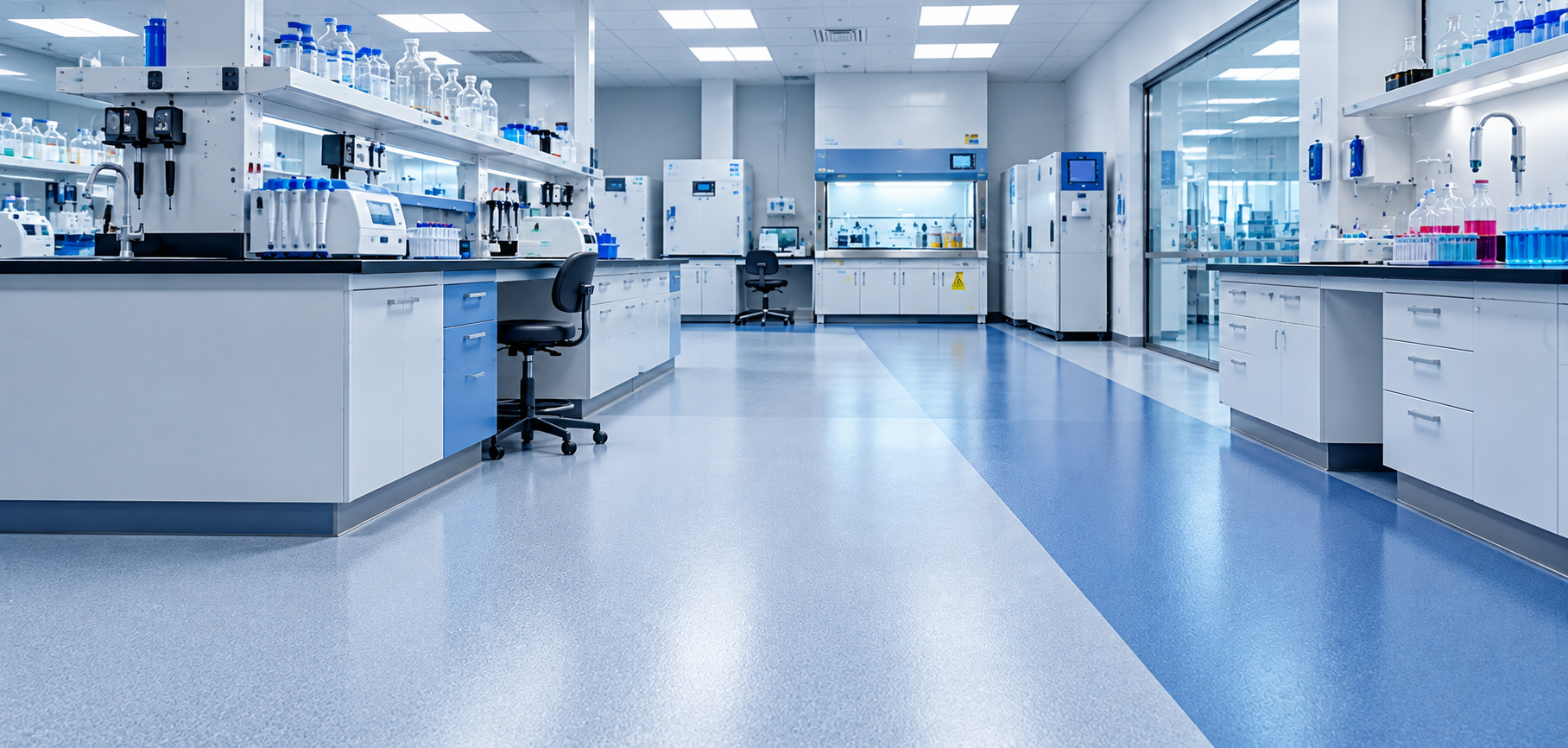
Laboratories often require flooring that can withstand demanding daily conditions while supporting hygiene, safety, and easy maintenance. Frequent cleaning, chemical exposure, spills, heavy equipment, and continuous movement can place significant demands on the flooring surface. Hospital Flooring in Qatar therefore needs to meet the practical requirements of healthcare and laboratory environments while supporting a clean and safe workplace.
Why Laboratory Flooring Needs Special Consideration
The laboratory environment is different from commercial spaces because floors are regularly exposed
to chemicals, liquids, equipment, and frequent cleaning. Flooring materials should therefore maintain
their performance under these everyday conditions.
Key considerations include:
- Frequent cleaning and disinfection
- Exposure to chemicals and cleaning agents
- Accidental liquid and sample spills
- Heavy laboratory equipment
- Movement of equipment
- Moisture exposure
- Stain resistance
- Slip resistance
- Ease of routine maintenance
Key Requirements for Healthcare Laboratory Flooring
A laboratory floor should contribute to a practical and hygienic working environment.
Healthcare Flooring in Qatar can be planned around several important performance requirements.
Hygiene and Cleanability
Cleanliness is particularly important for laboratory facilities. Flooring needs to have a surface
that can be cleaned frequently without causing any maintenance challenges.
Features to consider include:
- Smooth and easy-to-clean surfaces
- Resistance to staining
- Compatibility with routine cleaning products
- Minimal areas where dirt can accumulate
- Surfaces that support regular disinfection
Resistance to Chemicals and Spills
Laboratories often use chemicals, disinfectants, and other substances during daily activities.
Flooring should be selected according to the type and level of chemical exposure within the facility.
A suitable flooring system can help provide:
- Better resistance to chemical exposure
- Reduced risk of permanent staining
- Easier management of accidental spills
- Greater surface durability
- Better long-term appearance
Safety Underfoot
Spills and moisture can lead to slippery conditions in healthcare spaces. Suitable slip-resistant
flooring can support safer movement around equipment, laboratory benches, and preparation areas.
Important considerations include:
- Appropriate slip resistance
- Surface stability
- Safe movement around workstations
- Reduced risk from liquid spills
- Suitability for frequently cleaned areas
Durability for Daily Laboratory Use
Laboratory flooring needs to sustain more than regular walking. Moveable items, chairs, and equipment
can create pressure on the surface. Laboratory flooring in Qatar should be selected based on the
specific requirements of each facility, including traffic levels, equipment loads, chemical exposure,
and cleaning frequency.
Durability considerations may include:
- Resistance to regular foot traffic
- Ability to withstand rolling loads
- Resistance to impact
- Performance around heavy equipment
- Long-term surface performance
Flooring Requirements across Different Laboratory Areas
A healthcare facility can have different rooms and different flooring needs. A sample preparation
room and an equipment area may have different levels of traffic, equipment loads, and exposure.
The flooring plan can take into account:
- Diagnostic areas: Hygiene, easy cleaning, and stain resistance
- Sample preparation areas: Spill management and chemical resistance
- Equipment rooms: Load-bearing performance and durability
- Research spaces: Resistance to chemicals and frequent cleaning
- Corridors: Heavy traffic and wear resistance
- Storage areas: Resistance to equipment movement and impact
- Staff areas: Comfort, safety, and ease of maintenance
Installation Factors That Matter
The performance of laboratory flooring also depends on the quality of installation. Before installation
begins, the condition of the existing floor should be assessed and prepared appropriately.
Important installation considerations include:
- Proper subfloor preparation
- Correct moisture assessment
- Accurate measurements
- Suitable adhesives and installation materials
- Proper treatment of seams and joints
- Smooth transitions between flooring areas
- Appropriate finishing around fixed equipment
- Allowance for the operational requirements of the facility
Maintaining Flooring in Healthcare Laboratories
Regular cleaning and timely maintenance help preserve the hygiene, safety, and performance of
laboratory flooring. The right maintenance practices, combined with suitable flooring materials
and proper installation, can support reliable performance in demanding healthcare environments.
Frequently Asked Questions About Laboratory Flooring in Qatar
What type of flooring is suitable for laboratories?
Laboratory flooring must be suitable for the activities conducted there and ensure hygiene,
ease of cleaning, chemical resistance, slip resistance, and durability.
Why is chemical-resistant flooring important in laboratories?
Laboratories may be exposed to chemicals, disinfectants, and accidental spills. Chemical-resistant
flooring helps minimize surface damage, staining, and maintenance requirements.
What should be considered when choosing hospital flooring in Qatar?
Key factors include hygiene, ease of cleaning, slip resistance, chemical resistance, durability,
exposure to moisture, foot or vehicular traffic, and ease of maintenance.
Is laboratory flooring suitable for heavy equipment?
The flooring system should be selected based on the weight of the laboratory equipment and its
movement. Load-bearing requirements need to be assessed prior to installation.
How should laboratory flooring be maintained?
Proper cleaning, the use of suitable cleaning products, timely maintenance, and correct installation
help maintain the cleanliness, aesthetics, and functionality of the laboratory flooring.